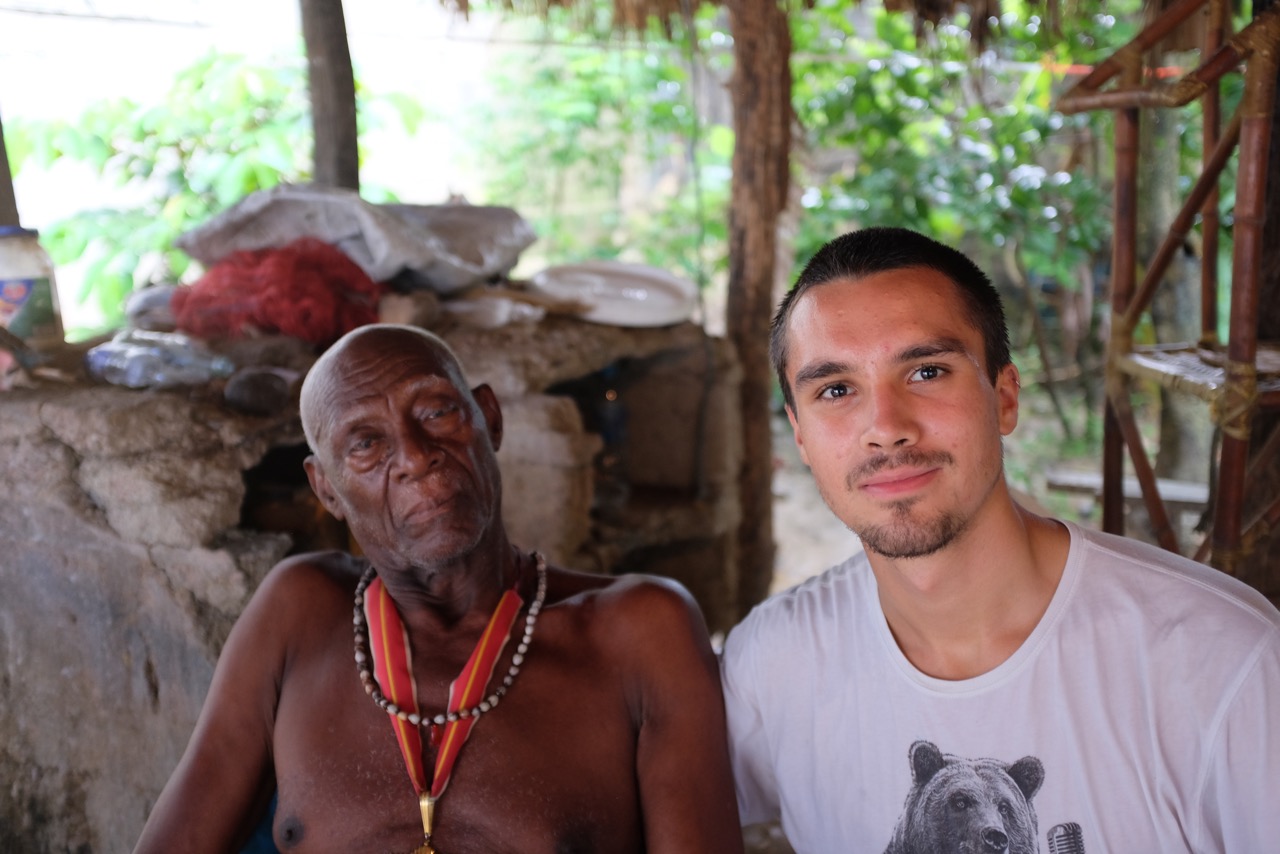

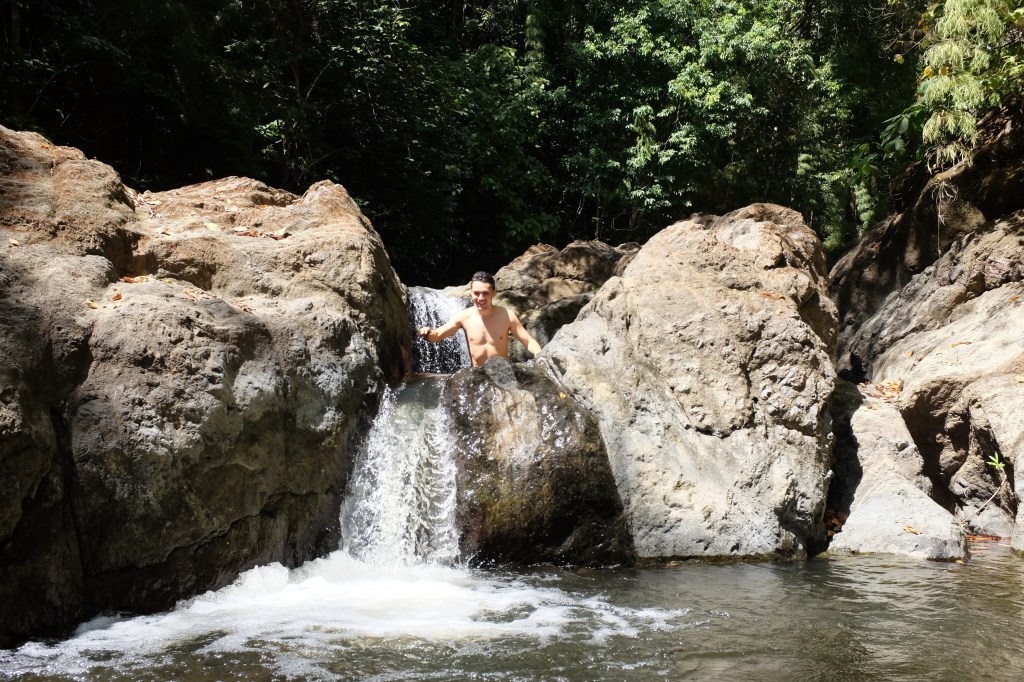
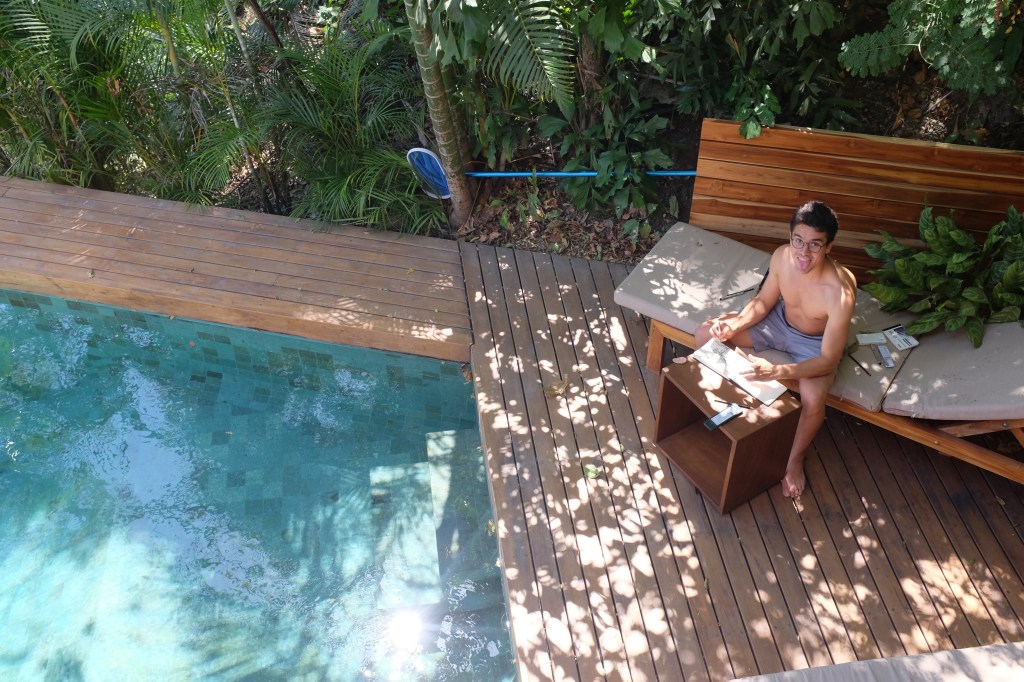


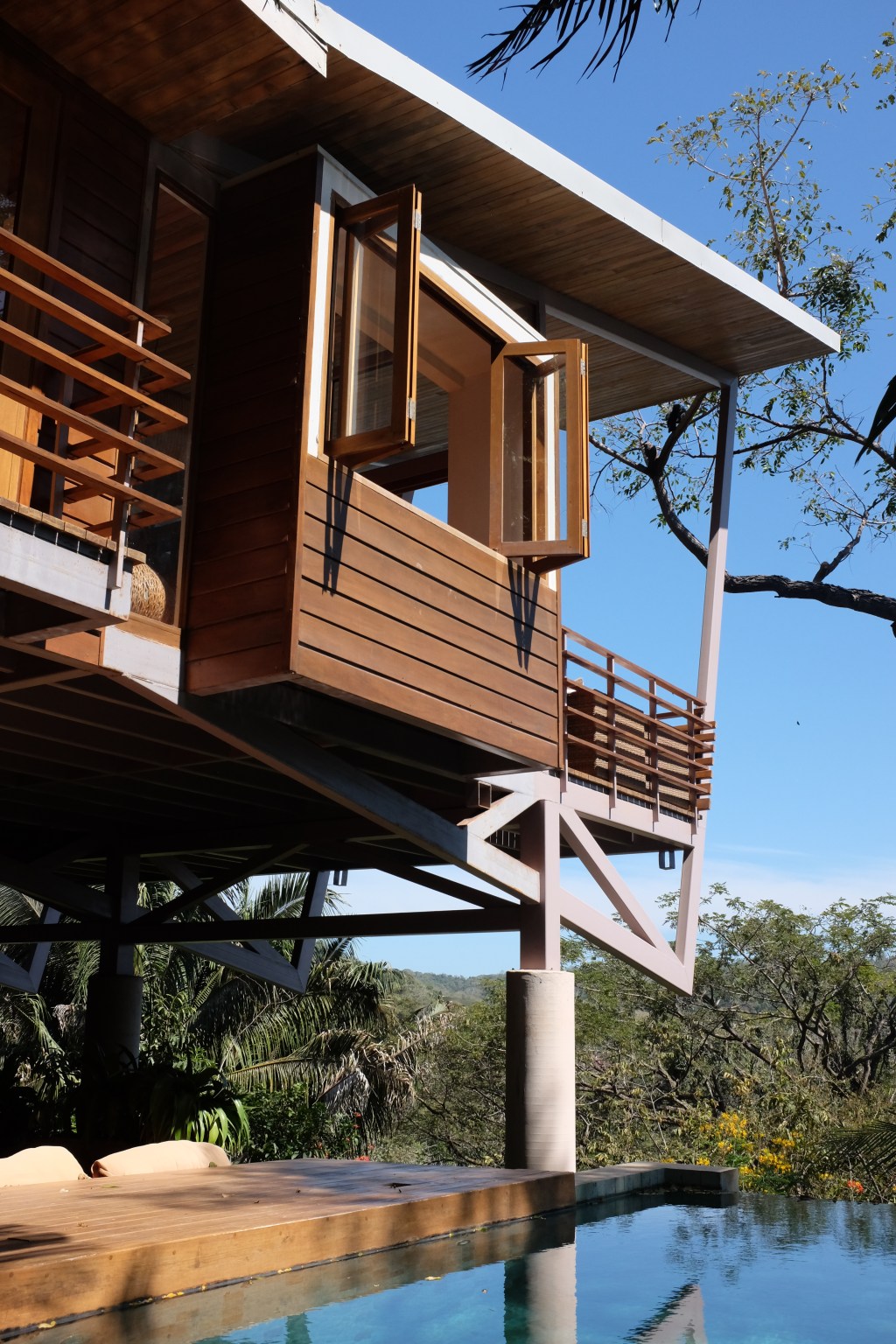
Meet Carlos ‘Kaliche’ Gallego from Vereda Graniza, Bello. A humble man with a powerful story about overcoming his demons through the power of education
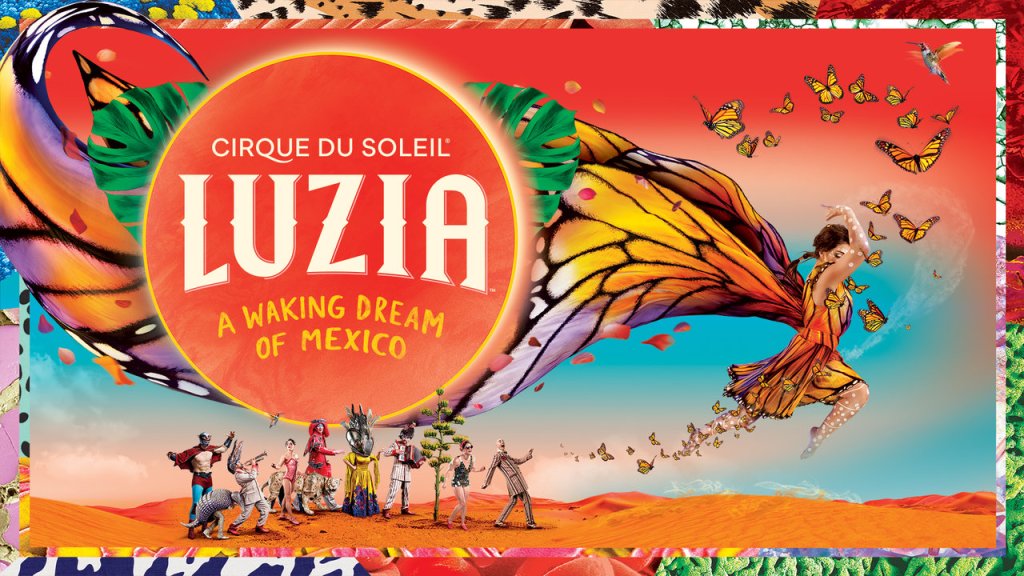
Cirque du Soleil returns to the Royal Albert Hall with an awe-inspiring ode to Mexican culture. Celebrating its 30th anniversary in the UK, the acclaimed Canadian circus troupe presents its most ambitious show to date: Luzia: A Waking Dream of Mexico.
Danny Concha catches up with the show’s artistic director Gracie Valdez and leading lady Shelli Epstein to discuss the excitement and challenges ahead…
This coming January, Cirque will cast a Mexican-themed spell on its UK audiences… what was the motivation for conjuring up this dreamlike image of Mexico?
Gracie Valdez: Mexico has always had a special place in our heart… particularly for the show’s writer/director [Daniele Finzi Pasca]. He lived and travelled extensively through the region, and wanted to recreate his experiences without making them literal. That’s why Luzia feels like a dream; it’s a symbolic reimagining of Mexican life. It’s about celebrating the imagination… not pinpointing a specific street in Guadalajara.
Luzia is Cirque’s most technically-challenging production to date. Can you talk about the challenges of integrating modern technology into the circus tradition?
GV: It’s been a challenge, and there are two key aspects in mind. Of course, we want to be ahead of the game in terms of entertainment quality… and technology is a big part of that. For example, Luzia features a rain curtain (10,000 litres of recycled water), which is a first for us. Whilst it can be tough adapting, we want to see how far we can push in terms of new approaches to traditional acrobatics, and this is a statement of that. That said, we also recognise the limits of technology. Bottom line, this is live production. We want you to be physically present, and not experiencing a performance through your mobile phone. The ‘live experience’ has always been central to the circus. We want to keep up [with modern entertainment], but at the same time stay traditional.
As you return to the UK, what do you hope to achieve with Luzia?
GV: As with all of our shows, we want you to be unplugged from reality and to see what can be done, physically. It gives you renewed hope. I want the audience to be inspired by the energy, joy and creativity… The show ends with a big party and its ultimately a celebration of life and love. We want you to walk away a little bit lighter at the end of it. Renewed hope, renewed excitement.
Speaking of excitement… Shelli, how does it feel to be Luzia’s leading lady?
Shelli Epstein: I still can’t believe it! I’m a Londoner, and I can’t get over the fact that we’re coming here. It’s magic. All the people in my life…they’re here. The fact that I can show my friends and family what I have been up to in the last eight years is something very special. We were in the Royal Albert Hall today, and I got shivers.
Can you tell us a bit more about your role?
SE: My character is called the ‘running woman’; she is based off the Tarahumara tribe, which is the ultra-marathon running tribe in Mexico. She is also part monarch-butterfly, which represents the migration from Canada (where Cirque was founded in 1984) to Mexico.
Finally, I have to ask about the nerves… what goes through your head as you are about to perform?
SE: …A lot! Acrobatics is never easy, and my act (Russian Swing) is very high-risk. Circus has taught me so much about my nerves. In the beginning, I would be all shaky, and you can’t have that. But that doesn’t mean nerves are bad… they’re good! For me, it was about learning how to suppress them and enable my nerves to work in my favour. It’s a very challenging and interesting skill… a lot to do with breath. Once you jump or fly, the adrenaline spikes and you have to learn to bring it back down because if you’re going to jump again, you can’t have it at that level. It’s really a mental thing. If I’m jumping and I don’t feel anything, that’s when I know I shouldn’t be jumping. That’s when I know it’s dangerous.
Thank you for sharing that… and can’t wait to see the show!
Luzia will be at the Royal Albert Hall from Sunday 12th January until Sunday 1st March 2020. Info and tickets from royalalberthall.com
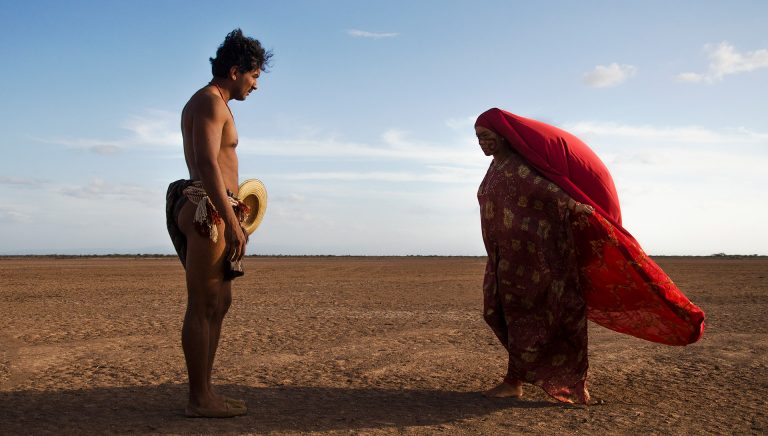
Following on from the success of their 2015 masterpiece Embrace of the Serpent, Colombian duo Cristina Gallego and Ciro Guerra are back with Birds of Passage, a powerful and unique vision of the Colombian drug trade, seen through the eyes of an indigenous Wayúu community in the Northern tip of Colombia.
Danny Concha spoke to the Colombian directors on a recent promotional push for the film. Here are some of the highlights from their conversation.
From start to finish, Birds of Passage is a tour-de-force which explores issues ranging from greed and corruption to cultural loss and the power of dreams. Was there a specific impact that you wished to have, when making this film?
Guerra: To tell you the truth, we do not believe that films like this can be summarised in any one single message. These are experiences and stories which we hope will impact each viewer in a different way… Birds of Passage is a film without any preconceived conclusions. In fact, the film itself is the message.
Gallego: In many ways, the film functions like a reverse-shot… it’s about inverting the discourses that affect everyday lives. For example, the story of the Colombian drug trade has pretty much always been told from the outside-in. With Birds of Passage, we wanted to talk about what these activities mean for the people [who] have lived alongside it… their end of the story. For me, this was one of the main motivations.
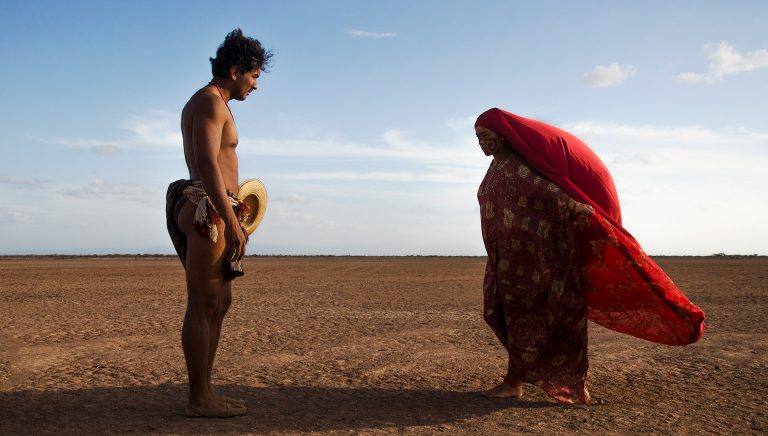
The film focuses specifically on the history of the Wayúu community. As your previous work suggests, you have a real interest in working with the indigenous groups of Colombia. Can you talk a bit more about this?
Gallego: As filmmakers, we are always looking for those oral histories and testimonies that are left untold… realities that even the majority of Colombians overlook. In fact, [it] is a real ‘debt’ in our national discourse, especially when it comes to voicing the lives of our indigenous population who, after all, are the guardians of both our culture and our past. As a predominantly Spanish-speaking country, it is easy to forget the other 67 native languages that make up our lived reality… each one with its own unique culture, territory and history.
With Birds of Passage, the idea was to approach one of these groups… to learn about their experiences. By dialoguing with the Wayúu, we were able to discover and articulate a great conflict between tradition and modernity, initiated in this case by the infiltration of the international drug trade.
In this process, we began to see the Wayúu as a metaphor for Colombia… a society which has in many ways betrayed itself and lost its way. Like the protagonists of the film, our country has begun to destroy itself morally with the arrival of rampant capitalism.
Despite all this corruption and conflict, do you see the possibility for a constructive outcome? Can indigenous groups benefit from such changes?
Guerra: It’s hard to say because throughout history, the indigenous communities of Colombia have suffered immensely. They have been targeted by successive governments who over the course of recent years have turned them into public enemies.
However, let’s not forget that we are talking about very powerful and resistant communities… especially the Wayúu. These are very defiant people, who have managed to build a life for themselves despite extreme conditions. This gives much hope for these communities, and their capacity to preserve themselves against the challenges they face.
As filmmakers, I also believe that we can assist them in this process by building narratives of mutual understanding… I see Birds of Passage as a continuation of the long struggle and resistance of such communities. It’s a form of supporting these groups and inserting their story into both national and international conversations… It’s about restoring voices that have been silenced. In order to understand who the Wayúu people are, we must learn to appreciate their existence in all its complexity.
As your vision continues to evolve, have you considered where it is heading?
Guerra: For me, film is not really about a trajectory. It’s about narrating stories which motivate and inspire people to share with one another. Our experience comes from the need to create a sense of solidarity and community in a world which is becoming ever more divided. To achieve this, we must continue to approach isolated spaces of society and communicate them to the world. It has been a privilege to make this sort of connection with Birds of Passage, by bringing together a diverse team of both professional and non-professional actors. All this has helped produce a film that is enriched with different languages and ideas, philosophies and visions… a fitting result for a country that is as rich as it is misunderstood.
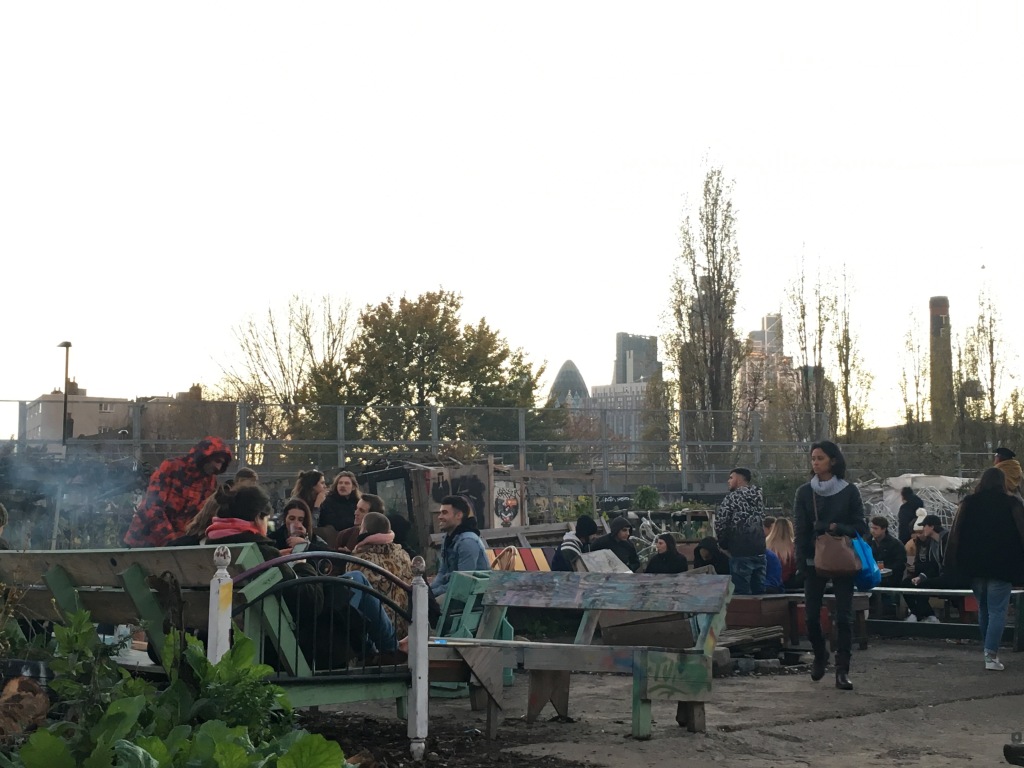
I don’t walk through Bethnal Green, I float. I literally feel light as I draw towards the Nomadic Gardens in search of Saleem. I ground myself to the moment, despite all the temptations of my mind to leak some imagined outcome and into the way I should be feeling. I somehow know that there is a lot a stake here but I know that imagining scenarios of how my proposal plays out will not aid me in whatever it is that I am hoping to achieve… if even I am not really sure what that vague something actually is.
I arrive at the increasingly familiar gateway into the Garden. it looks empty, it is a Sunday evening after all. But of course, assumption dissolved rapidly into the fuzziness of reality as I notice all the people there. Saleems little temple house is shut. Door locked. I feel momentarily deflated as I conclude that he is not in today. But if I have learnt anything over this whirlwind of a weekend is that always expect the unexpected and be prepared to change plan at any minute. As soon as one door closes (in this case, literally!) another surely opens up…
In the corner of my eye I see a motley crew assembled round a table in Saleem’s side room. Cans of pilsner litter the table as the group engages in a chilled, marijuana infused sense of togetherness. I hesitate, unsure whether or not to approach the group. To insert myself in the little dynamic they have built for them in this moment. I hestitate only for a moment, then I know only to enter and engage. To throw myself into the mix.
“Saleem in?” I ask, in as as confident a way as I can muster. To my surprise, it comes out very confident and smiley and loose.
“Nah mate, he’s out… he’ll be back in a bit” says the boy I know to be Charlie. This rough looking fella, in a beany with a haggard beard and signs of damage etched over his face. Charlie is always here, every time I enter the garden.
“Come sit down and chill if you like”, Charlie offers – gesturing to a chair. I hardly have to think about it…
“That seats wet though”, says Adrian with concern in his eyes, suggesting another. It isn’t. so I sit down to the left of Charlie.
“He’s a mechanical engineer, she’s an accountant… and I’m a cunt
He gestures me away, lager can in hand. I see his eyes through the fire and I no that this isn’t an offer, like the one I made him moments ago. He has the ‘let’s go for a walk look in his eyes’ and we end up doing precisely that… going for a walk.
Charlie is testing me, he is probing me. From the off, it is clear to me that he thinks he is too hot to handle. That I am playing with fire;
“trust me mate, you have no idea what I’ve seen… what I’ve lived through. I’ve seen it all mate, the fucking lot. Nothing surprises me. The things I’ve seen, are things you could never understand”
I breath heavily as I hear this, he has my ego vibrating with outrage at this constant putting down. That I am unworthy, that I am somehow inferior to this man, that I am not his equal. There is something unnuanced about what he is saying, a sort of clumsiness about his words comgin from a place of pure experience, almost illiterate and missing all the subtleties to turn that experience into wisdom, it feels coarse, almost punishing
But in that, there are moments, when he hands me the beer can, when he bumps into me as we walk,. it is clear that this fascinating creature of a man is drawn to me, of that I have no doubt. there is some reason as to why he is giving me this time, there is something he needs from me, something I can offer him… I feel it but in no way shape or form can I grasp it in this moment.
We turn right out of the alley and start walking up brick lane towards the subway. The conversation is light hearted as we test and probe each other, in my understanding creating a deep bond like the one I felt with Olivia, like the one I felt with Ziad only this one is different. I cant help but feel this one is different, there is struggle here, there is violence, there is tussel.
We buy our subways, him first. “Get yourself something” he says, and I tell him I’m not hungry. Just as those words come from my mouth, I am up buying myself a Chicken mayo sub, bitterly disappoiunted in my lack of conviction. bitterly disappointed that he was right.
“Man, I didn’t realise how hungry I was”, I say to him in a smile wrapped up in eager charm. But behind it, I meant every word. I actually had no idea how hungry I was. He knew, and he knew that I knew.
The game of mental chess that we had been playing stagnates as we chew down our sandwiches in silence. we are holding each other’s silence, daring the other to make the first move in this momentary deadlock. Of course, it is Charlie who breaks the hold.
“Man” he says, with a look of disappointment and self-pride in his eyes, “you’re not it.”
I let these words ring out in the silence. The invisible rope is taught around me neck. I feel like he has me.
“I think I have you sussed out mate”, he says smiling at me, playfully now, but with a deadly stare in his eyes. his gaze fixed into mine.
“Go on”, I manage to say
“You’re one of those types, you come in here and I think, nah man he’s way too nice. That smile, he’s loose, he’s open, young, a good looking bloke and I’m thinking ‘nah… way to nice”.
“You think you’re the first person to ask me for my story mate?, you come in here and you think you’re the firwst one?
I smile, because I sense now that he is leading himself down a rabbit hole, I feel the noose loosen, I feel the power shift.
“i reckon you’re one of those types, with your university degree carreer, with your life ahead of you, ambitious type… I think I know you man, but I could be wrong. You’re here for yourself, you want this for yourself and that’s why you’re here mate, for profit, to further yourself and what’s in it for me eh? You’re in this for yourself. You’ve had it east.
I smile.
Bad move, he misplaced that pawn.
“Almost – I say” a cocky smile spreads across my face, I cant help it.
“but not in the way you think it to be. See, I believe we are all in this for ourselves, we are all looking to fullfill. Man I’ve not had it easy, I’ve been to dark places, I’ve been to the depths, I’ve wanted to kill myself, ive been there…
I have him hooked until that last claim where my hold breaks.
Power shifts back,
“just saying that mate, just by playing that card shows me you’ve got very little to play. that’s desperation man, that’s your last resort that you just played there.
He stares at me, looking me up and down
“you’re not it.” he reaffirms, with more certainty than before. My case only strengthened his claim.


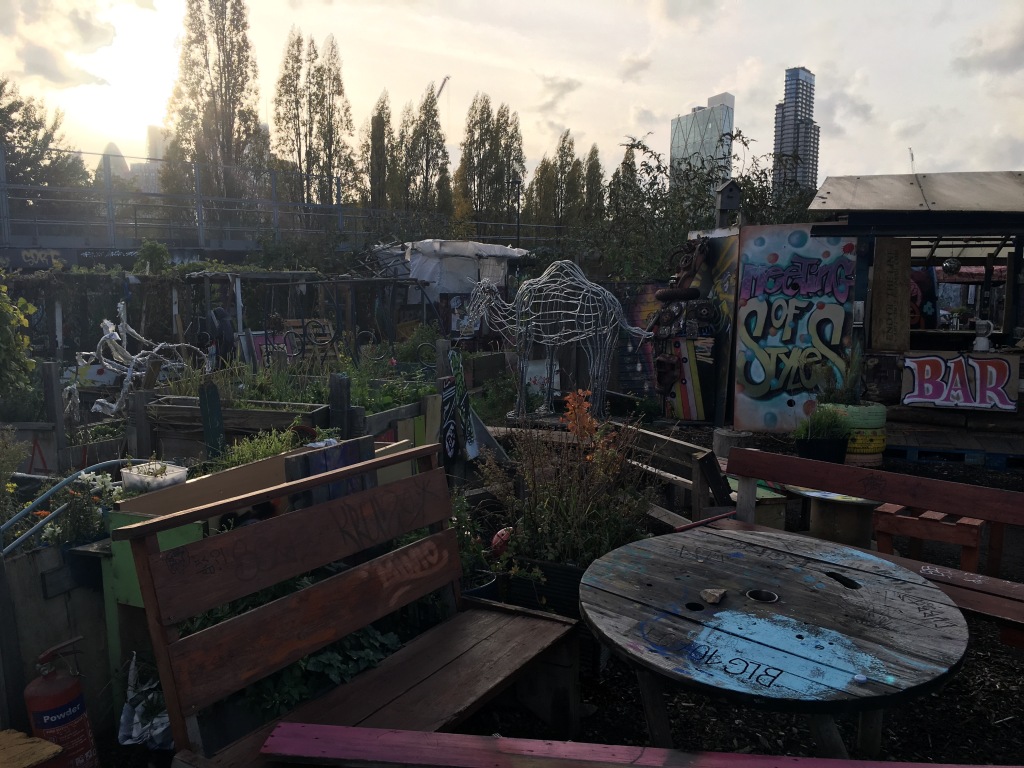
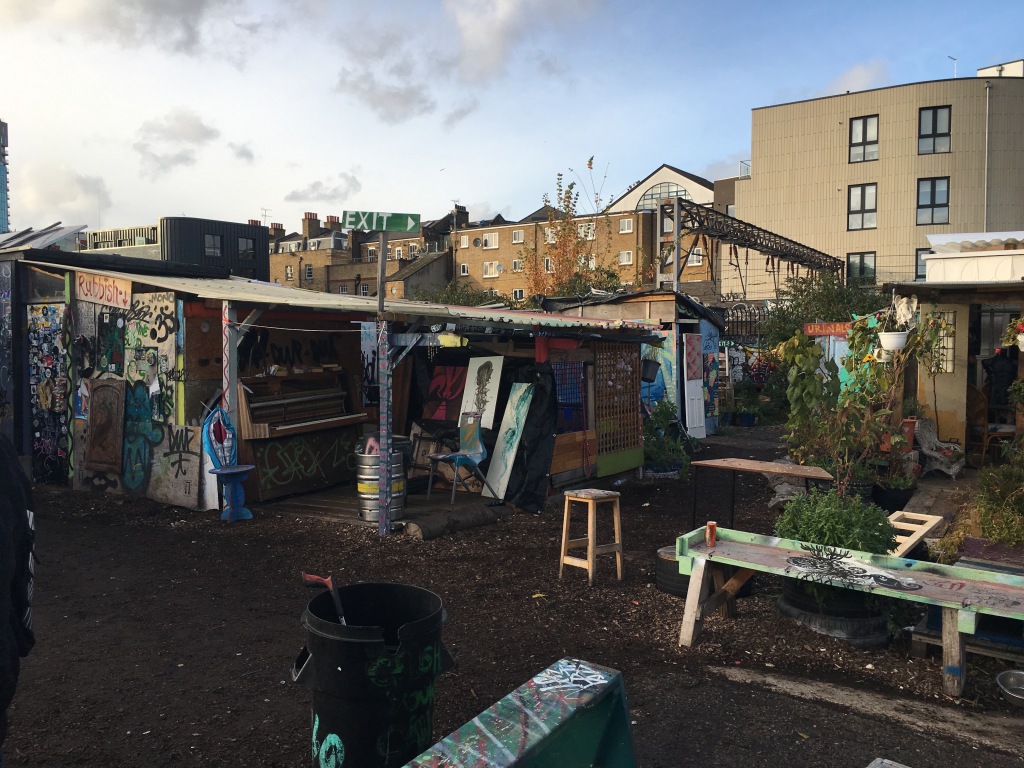
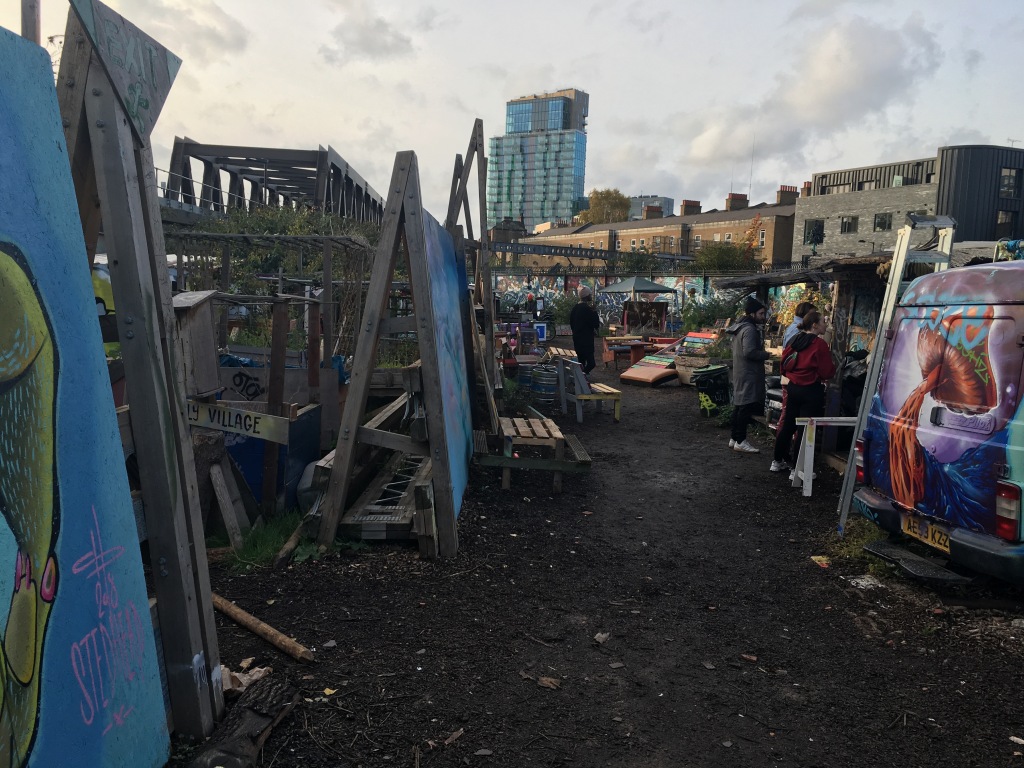



there is something deeply seductive about this little discovery; how the place sort of found me, rather than me finding it. ‘the best way that I’ve heard this described is like some sort of oasis’ says Sam, as we walk back, three of us under the floodlit underpass.
something so uniquely human about this space. like a moss, growing in the cracks… unrefined, a bit wild but indisputably alive.
the fire draws us into the less familiar world of primitive man, against a backdrop of rampant advancement and progress. the shard and the gherkin shine out with the bright lights of the city, as the metro chugs along in the slowly darkening night – a kingdom crafted from steel, concrete and glass. beer cans scattered like the metropolis. hands warming by the fire. different languages spoken, different lives being lived and shared between minds so fundamentally different, yet clearly joined in this momentary instant of mutual appreciation.
Jay and two Italians practicing stick against the graffiti wall, utterly absorbed in the activity accompanied by the trance rhythms pumping from the speaker. I look on, equally absorbed in the skill that this Italian man has dedicated hours, days, years of his life to perfecting, with the utmost dedication and focus as if he were meditating on each movement; getting lost in the dynamism and flow of his art; something that exists outside himself – spirals, flicks and spins that exist independent of him; a spectacle that lives and breathes and dances with a life of its own, like the man is tapping into the movements themselves, rather than creating them. As if the movements are magnetically drawing his arms to move in this way, as if the spectacle is carving itself out in the crisp still air. puppet becomes puppet master? cigarette pursed between his lips. he is absorbed. I speak to his friend Jay; a man who seems more broken than alive. ‘it’s a wonderful art… I’ll show you. Oh, wait, I’m actually quite drunk…sorry, I’ll show you another time.’ it’s four o’clock on a Sunday.
a couple leaves and a space opens up for me by the fire. I slot in and I really feel that sensation of entering a circle. not so much that feeling of joining a ‘group’, but rather that wonderfully tactile feeling of slotting into an activity that a collection of other minds are engaged with. I think there is something so essential about fire, about drawing in to the warmth, to the burning of life where the flames are animate with chaotic flickers that I will never fully understand. I value fire because it is the picture of irrationality; it is chaos – if you look closely enough there just isn’t that logic, that we have slowly learnt to expect from life; every flicker and crackle is different and will only ever happen once in that way. I really think the behaviour of fire is fascinating to me in this moment because it invites me to think about my own brain. the neurones, crackling and spitting and flickering to keep the logs warm in my mind. to keep me switched on, energised and alive. the fire mirrors the introspective mind – energy working together to create something that sustains, all within a system that can never be fully grasped.
there is something very special to me about this little scene. it is like a clandestine life growing in the cracks of the cold machine of London, with the binders and weeds reclaiming chaos amidst all the order. and it is a real pleasure to at least momentarily feel part of this… to be part of the moss, the mould, the roots that breaks out through the concrete cracks to assert in its own inevitable way, the irrepressibility of life. that aliveness can never really be denied, no matter how hard we try, it will fill any space that is left for it.
I catch eyes with one of the Italians opposite me, across the now roaring flames. the flicker of the fire brings out that little flicker in her eyes and all of a sudden I feel very drawn to them; just as I was drawn to the fire, again… the essential is what draws us. I smile because I can just enjoy little glimpse and my mind has decided to stay put… rather than run away with its familiar bedfellows of lust, love and fantasy. we actually end up catching eyes momentarily, and as my mind is still, so are my eyes. I hold my gaze and in a wonderful way, so does she. she smiles a very honest little smile to me, a smile that tells me that in another time, perhaps another place, with all the formalities and social norms stripped away, with all the barriers of our conditioning and language taken away… with all that removed… there would be a nice little connection here. just because. but of course, all the red tape is here and I don’t mind. neither does she, hence the smile. it is inviting but more crucially ‘amicable’, almost like a silent agreement that we make to enjoy each other’s gaze, to warm ourselves in whatever is flickering with life inside them and then to return our gaze to the fire. momentarily I feel a new warmth bubble up in my core, and I am so happy to find that I am satisfied with this. it shows I am becoming more at peace with myself. By the time I have finished conversing with Sam and Yasser, the Italian girl is gone, and it just doesn’t matter to me.
I have stumbled into a little community here that is organic and authentic and that crackles with the warmth of a fire spiralling smoke up to the city heights.
This article was originally written for BritEs Magazine
It all started with a DNA test.
A sample of saliva that would compel Puerto Rican rapper René Pérez Joglar (a.k.a Residente) to embark on an immense journey of self-discovery. A genetic revelation that would force him to walk away from all the fame and fortune of his internationally-acclaimed hip-hop outfit Calle 13, in order to reconnect with his ancestral roots…
Joglar’s solo mission is immense: to travel the world over in search of those diverse sounds and stories that flow through his veins. To fuse cultures, voices, melodies and rhythms into his self-titled hybrid album ‘Residente’, and to document it through this cinematic debut of the same name.
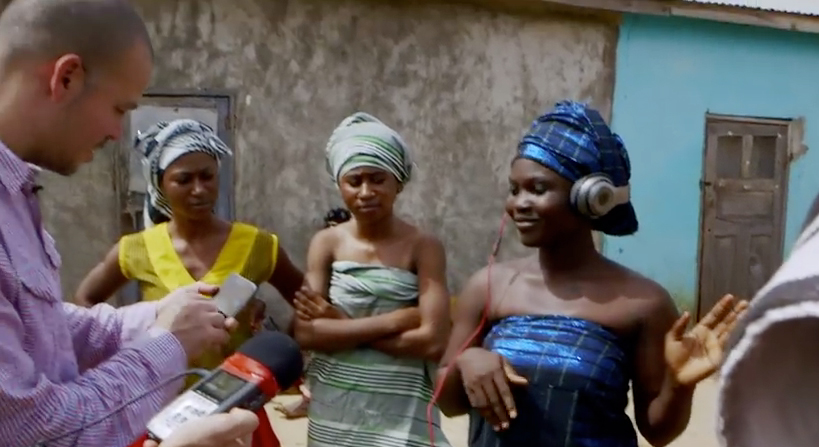
And the result does not disappoint. ‘Residente’is an energetic tour-de-forcethat takes the viewer on an enthralling trip through the sites of Joglar’s biological heritage. We are taken from the frozen mountains of Siberia to the war-torn Caucasus, from China to West Africa… finishing off in Joglar’s native Puerto Rico. Whilst the journey is at once autobiographical, historical and political, it is above all deeply personal. It seeks to emotionally connect with the root of all shared human experience and to communicate this through humanity’s universal language; music.
Through a combination of eclectic samples and stunning cinematography, ‘Residente’serves up a series of powerful snapshots, which reflect the lives of some of the planet’s greatest yet least-known musicians. Indeed, through Joglar’s project, many unsung heroes are finally given a voice on the global stage, as the viewer is treated to a rich fusion of musical traditions which vary from the Tuvan throat singers in Kyzyl to Chinese opera performers in Beijing and the melancholic guitar chords of a Tuareg refugee in Burkina Faso.
Whilst each of the film’s chapters offer us a condensed lesson in the brutal realities of conflict, poverty, exploitation and socioenvironmental injustice, the most powerful moment of the film occurs in the Caucasus, where Joglar deals the subject of war. He does so by recording the mourning wails of widows from Chechnya, Azerbaijan and Georgia, later harmonising them in the studio as a powerful statement of the unspoken solidarity that is brought about through shared suffering. Against a harrowing backdrop of death, devastation and crying children, this chapter expresses the anguish of three voices from three countries, bound together by battle and bloodshed.“Our cells fight to form each of the organs in our bodies,”concludes the solemn Joglar voiceover, “we are all organisms made out of war”.Just like music, war too has become a universal language.
However, over the course of 90 minutes, Residente successfully balances these hard-hitting elements with lighter moments of humour (such as Joglar’s frustrated attempts to overcome language barriers) and heavy doses of unrestrained wanderlust. There is no doubt that Joglar relished these adventures and his traveller’s spirit is shared with the viewer throughout.
The only downside of Joglar’s hunger to cover ground is that it often upsets the rhythm of the film. At times, ‘Residente’ feels rather rushed, or better said, constrained by the 90-minute time framework. Whilst it certainly adds a sense of urgency to the quest, some moments are left feeling somewhat undeveloped… the story not quite told. This is particularly the case with Joglar’s travels through West Africa.The ambition of the project at times causes the film to buckle.
However, these flaws are ironed out in the film’s final chapter; a deeply personal exploration of Puerto Rican history and fervent cry for the independence of his homeland. Through an expansive selection of footage and testimonies, Joglar tracks the enduring spirit of Puerto Rico’s Nationalist movement and even interviews one of the key men behind a movement that eventually led to an assassination attempt on US president Truman. Joglar’s choice of metaphor to illustrate his nation’s struggle will no doubt upset animal rights activists, as gruesome cockfighting footage is used to distinguish between “domestic cocks” (pro-statehood Puerto Ricans) and “fighter cocks” (pro-independence Puerto Ricans). That said, controversy is no stranger to the former Calle 13 frontman.
Polemics aside, Joglar’s commitment to social justice continues to grow and expand. With the release of ‘Residente’, he edges ever closer to touching those nerves that truly connect us as humans. Through his travels, Joglar offers us an authentic type of music. Music for the sake of music. Music for the sake of humanity.
RESIDENTE (European Premiere)
Dir. Rene Perez, 2017, US, 96mins
Screening at Doc’n Roll Film Festival
17 November 2017 at 18:30 LDN – Picturehouse Central

I think it’s fair to say that whenever we invest ourselves into something, we do so expecting a reward. When we go out searching, we want to come back having found something. We want clarity. We want answers. We want to end with a solid conclusion…
It is precisely for this reason that I have struggled to submit this final blog post. After an entire year spent living, breathing and dreaming in Colombia, I find myself unable to ‘wrap it up’. I’m still grappling for some final and decisive ‘lesson learnt’.
It’s clear to me that I want my time in Colombia to be some kind of bildungsroman novel, a neat little coming-of-age narrative with beginning, middle and empowering end. A story which sees me returning to the UK triumphant, as this ‘awoken’ and ‘complete’ man…
But of course, things never quite work out like that. Life is a non-linear story. It is much more like a collage of messy, colourful and overlapping moments, pieced together with surplus amounts of glitter glue. At least that’s how I’m seeing it right now.
So rather than unfaithfully reducing my time in Colombia to some sort of ‘chapter’ in my (non-existing) ‘story’, I’d rather share a bit of the wild and glittery mess:
Colombia, for me, is a crucial encounter with a magician in Bogotá who taught me how to see through his tricks… when I first met Pedro, he plucked a plastic dove from my ear and told me to “fly”. Over the following months, he would do this to each and every person we met – from athletes to Miss Colombia candidates, young offenders to priests, business moguls to soap opera stars, terminally-ill children to university deans.
Why?
To show me that magic is never ‘magic’… it is something that can be constructed, controlled and claimed. Once we begin to master the art of creating our own magic (and projecting it onto the world), the world responds accordingly. The smile of others, fills us with light… and we spread light back out again. This is where the real magic happens.
Colombia, for me, is questioning my relationship with privilege, comfort and material things. Seeing the way a close friend in Barranquilla lives the life of a king despite not having a penny to his name; how losing yourself to cumbia music, sunshine and freshly-caught fish is a much more productive waste of your time than pulling out your hair in the pursuit of capital. A cold Águila beer. A crucial World Cup win. Salsa at La Troja bar. An evening overlooking the Magdalena river. The costeños of the Caribbean Coast know how to celebrate in a way that I have never seen before…in a way I didn’t really think was possible. Celebrating is as important as desiring. Something I certainly needed to learn. ¡Juepa Je!
Colombia, for me, is the example set by an extraordinary group of hip hoppers in the outskirts of Medellín. These young rappers, who have lived through the city’s most atrocious and brutal times – namely the Operación Orión massacre in Comuna 13 – dedicate each and every day to promoting music, art, the written word and agriculture as an alternative to all that pent up violence and anger. Seeing the way that Medellín’s forgotten children look up to their idols… seeing real grassroots change…seeing how kids as young as 5 rap about their frustrations and traumas… how they care for their urban gardens with pride. They taught me the importance of the word sembrar (to sow). Whatever you do, make it bigger than you, make it be something that can germinate, grow and nourish others; use your time to produce something that transcends it…
Colombia, for me, is conflict, and ‘letting go’. Wonderful tussles and contests on the football pitch, in the workplace, on the rooftop of my house, on deckchairs, in the pool, on a night out, on a night in… conflicts in my mind and in my heart. Colombia was about learning to negotiate with people who have values I had never encountered before. It was very much about learning to negotiate with myself and my emotions, in the best possible way. It was about letting go of people I love at times, and about sacrificing things that I want either now, wanted in the past or may well want in the future. Colombia is a radically different life… something that so fundamentally filled me, and which I will need to reflect on in this coming year. Is Colombia what I want? There are huge cases for both ‘yes’ and ‘no’.
Colombia is pure magic. I made Colombia for myself and Colombia made me. That’s all I can really say right now as I’m a bit confused and one of the best years of my life has left me with more questions than I can dare answer.
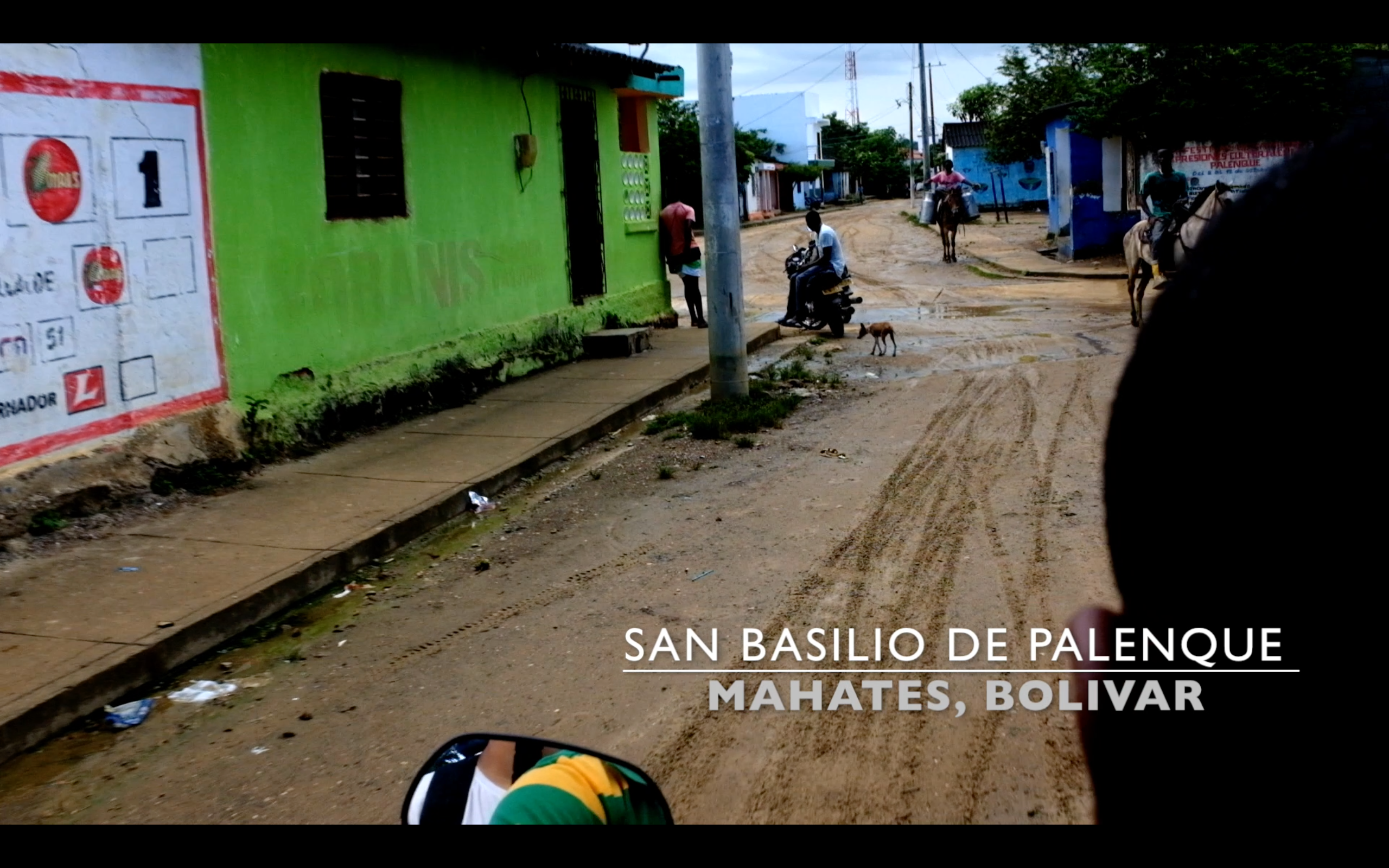
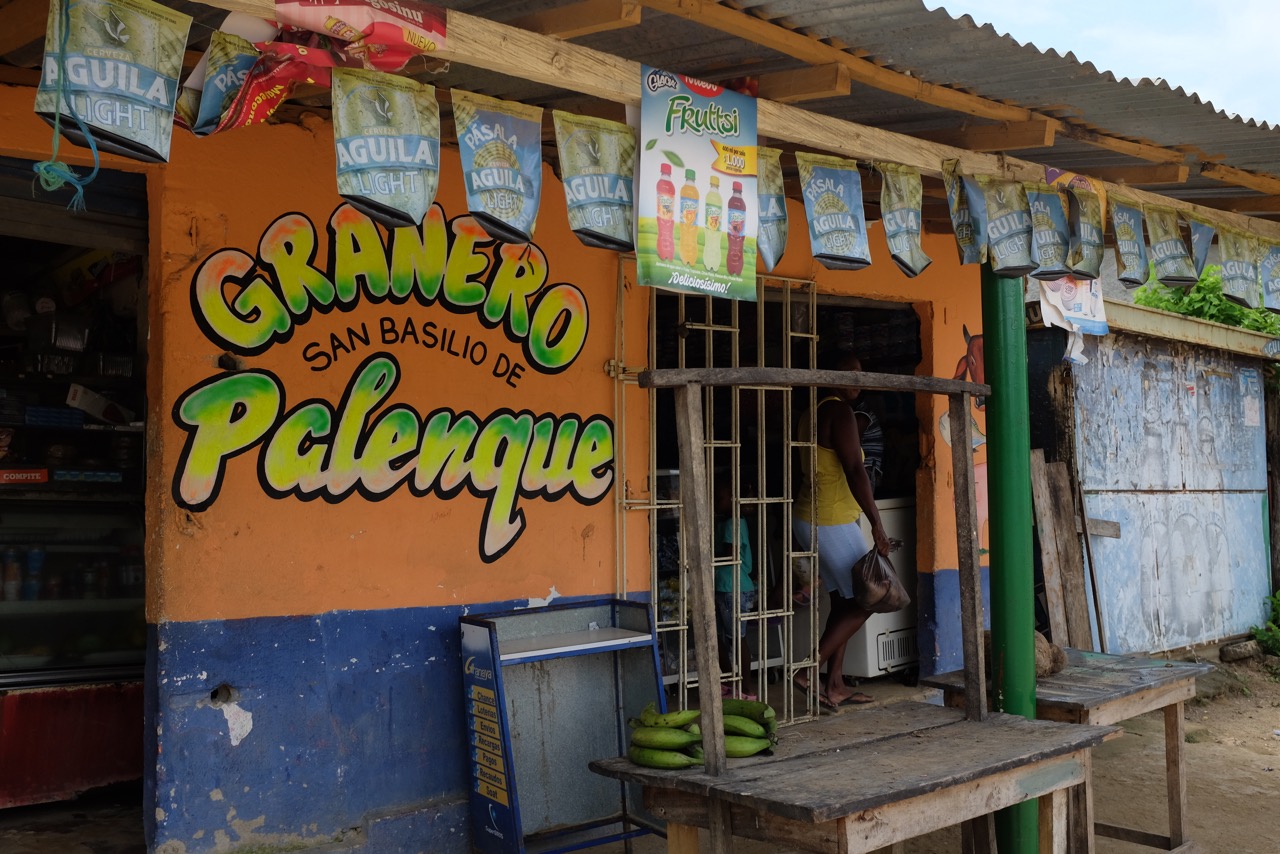
The tucked-away village of San Basilio de Palenque in northern Colombia undoubtedly deserves a shout-out for being amongst the “most amazing places you’ve never heard of”. To this day, it remains an astonishingly potent symbol of Afro-Colombian identity; a living, breathing, fighting display of community pride and resilience. If Cartagena is the so-called ‘jewel of the Caribbean’, then San Basilio de Palenque is the undisputed diamond in the rough… the hidden treasure which most of us didn’t even realise was there!
A 30-mile bus ride south through hills and swamps is the only thing separating this isolated village from the swarms of tourists that pour into Cartagena’s Old Town each day. When I first arrived, I had absolutely no idea that this place even existed… the second I found out about it, I knew I had to go.
The people of San Basilio de Palenque see the village as their very own “rincón de Africa” (“corner of Africa”) and celebrate San Basilio as the “first free town of the Americas”. It is a community of 3,500 inhabitants, all of whom are direct descendants of heroic African cimarrones (maroons) who risked everything to flee slavery and set up their own settlements during the colonial era. “Palenque” literally means “walled city” or “stronghold” and that’s exactly what San Basilio is. What’s more, it is the only palenque that has survived to the present day.
I came hoping to learn more about the village’s history and folklore and to find someone that I could interview for my YouTube channel, yet from the moment I got there, I could tell it would be a case of “too many stories, nowhere near enough time”.
For starters, the village has its own justice system, where disputes are settled by families rather than police; government intervention is avoided at all costs. Then you’ve got all the myths and legends about the San Basilio’s founder – Benkos Biohó – who was such a formidable leader, that he left the Spanish Crown with no choice but to declare the village free, after it thwarted the Spanish army time and time again. Then there is the story of the palenquera women who would braid their hair with secret escape routes which they would then pass on to fellow prisoners in the event of recapture.
Most fascinating of all, San Basilio de Palenque has its own unique language – palenquero – which is the last surviving Spanish-based creole on Earth. Whilst largely remaining under the tourist radar, these cultural treasures did not go unnoticed and in 2005, UNESCO declared San Basilio as a Masterpiece of the Oral and Intangible History of Humanity.
But for me, the defining element of San Basilio de Palenque is its music. As Colombian historian Diana Uribe nicely sums up: “la historia es más cantada que contada” (“history is more sung than it is stated”)
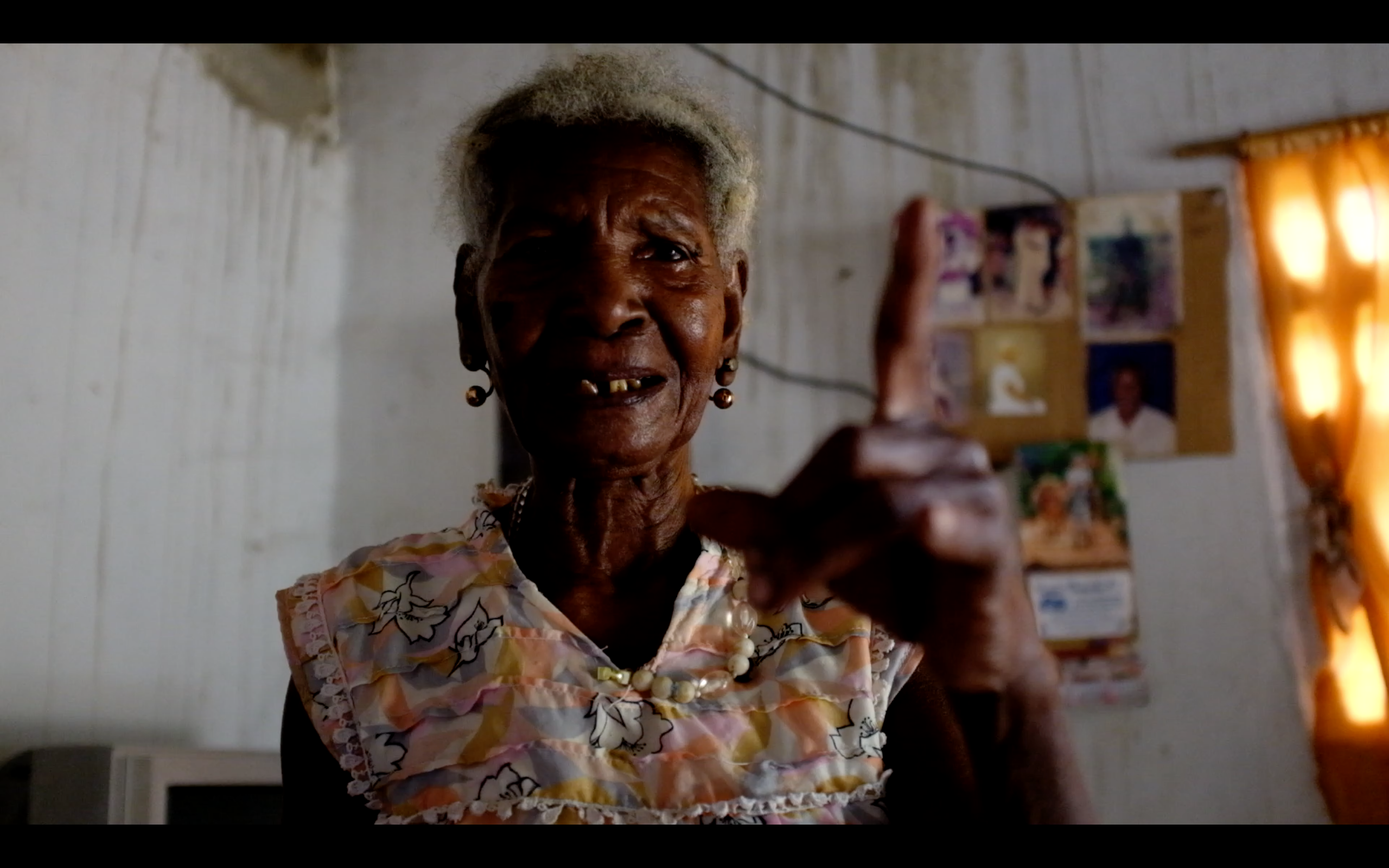
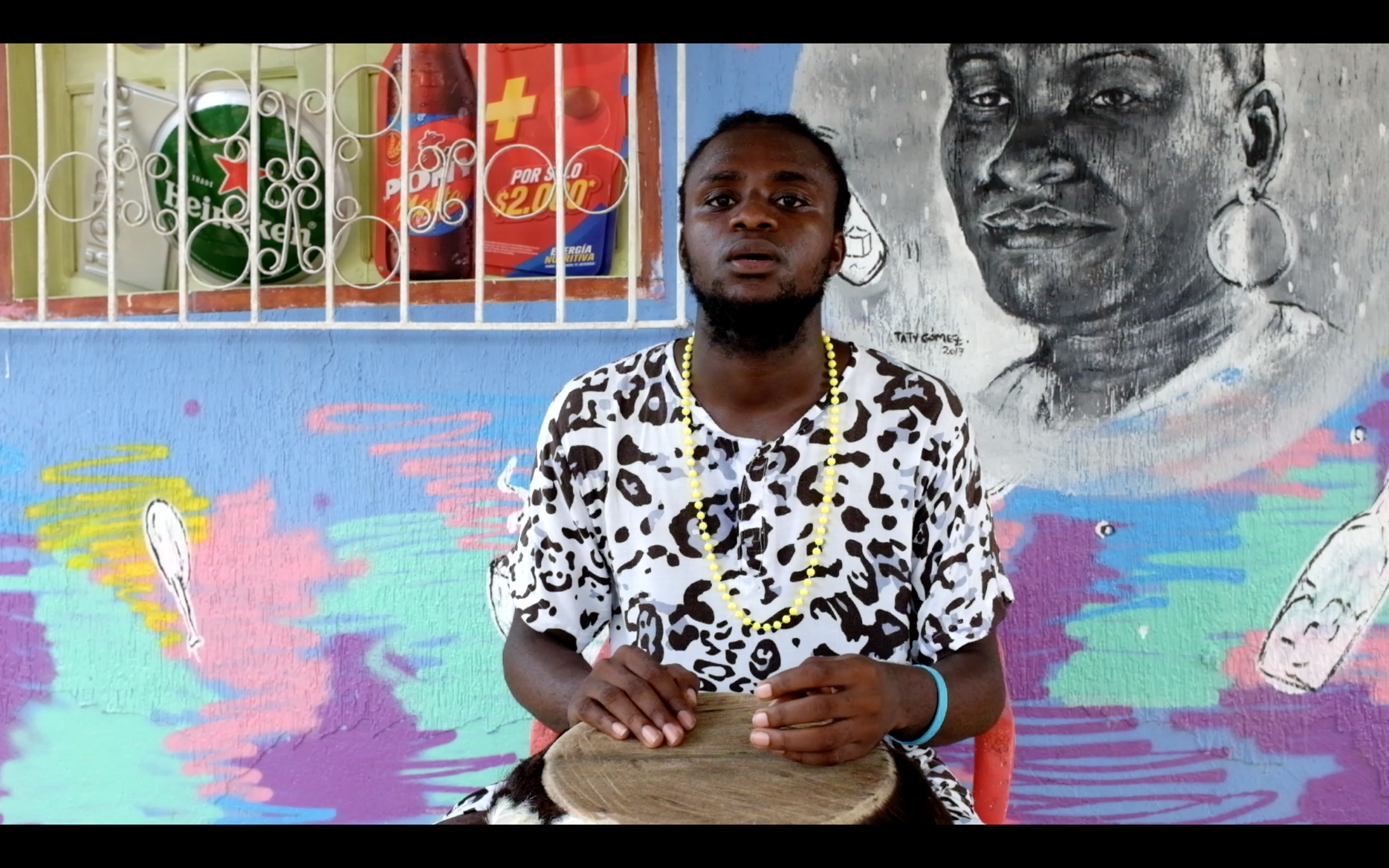
And I was absolutely delighted to meet legendary musician Rafael Cassiani Cassiani; lead vocalist of the pioneering musical collective “Sexteto Tabalá”. This man is nothing short of an icon, and I very much hope you enjoy this short documentary that we made together…